
Caswell County Probate Records Overview
North Carolina probate and estate administration is managed by the Clerk of Superior Court. In Caswell County, the local venue is the Caswell County Clerk of Superior Court at the courthouse in Yanceyville. The office handles estate administration, special proceedings, and records connected to the authority of a personal representative. The North Carolina Judicial Branch also says civil, special proceeding, and estates case information can be accessed on public self-service terminals in clerk offices, while the full case file is viewed by visiting the clerk's office in the county where the case is located.
Caswell County probate records can include wills admitted for probate, estate files, applications for letters testamentary or letters of administration, inventories, accountings, creditor notices, spousal allowance or year's allowance filings, guardianship and incompetency proceedings, special proceedings affecting real property, orders, receipts, and final settlements. The North Carolina wills and estates help topic is the statewide source for estate administration basics.
The state wills and estates source is represented in the manifest image from North Carolina's probate help topic.
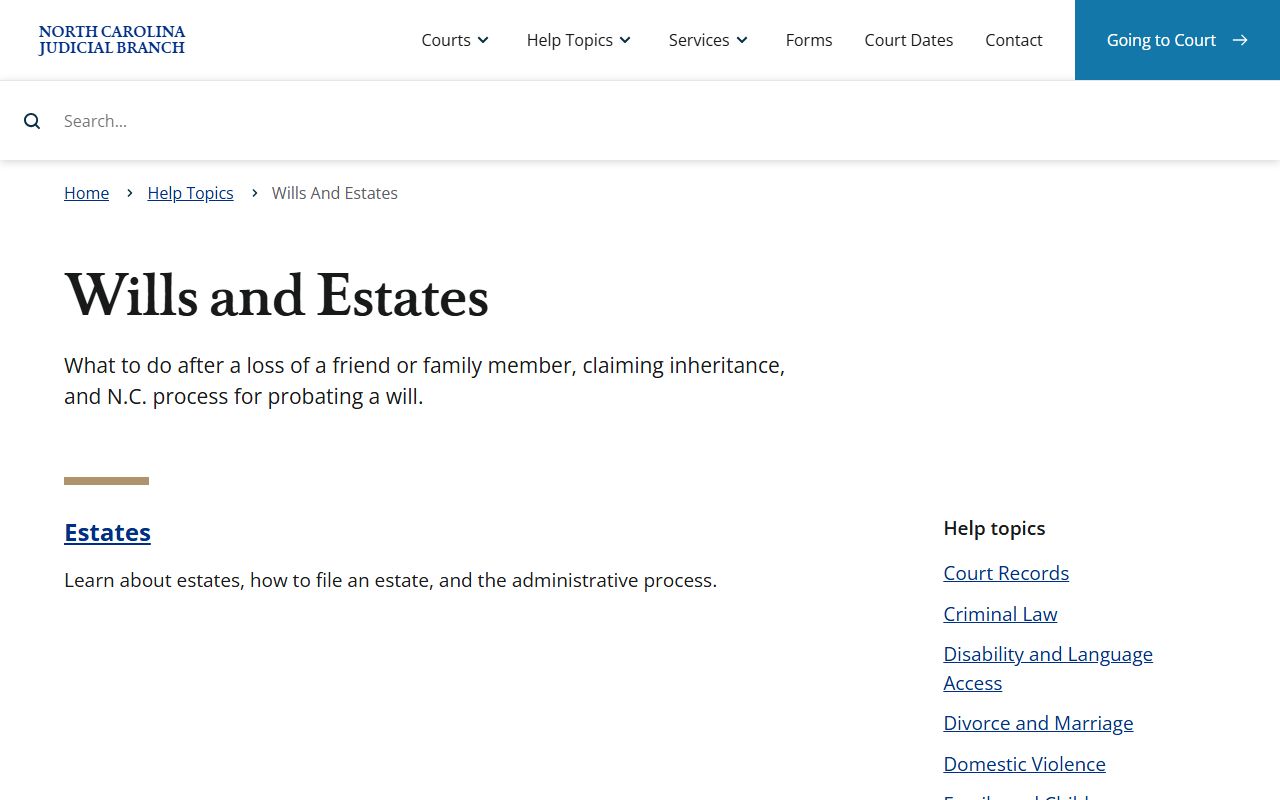
That source supports the local point that estate files are clerk matters even though they are often called probate records.
Caswell County Probate Terms
Estate records use terms that do not appear in most civil or criminal files. A short definition block helps separate the person who died, the person asking for authority, and the court proceeding used to manage assets or care decisions. North Carolina sources also use the term special proceedings for some clerk-handled matters, including estate-related and real-property disputes.
- Testator
- A person who made a will before death.
- Executor
- The person named in a will to carry out estate duties after the clerk grants authority.
- Intestate
- A death without a valid will, which can require letters of administration instead of letters testamentary.
- Guardianship
- A court-supervised matter involving authority over a minor or an incompetent adult, with access limits when confidential details appear.
- Conservatorship
- A protective property-management concept often discussed with guardianship, although North Carolina records may use state-specific guardianship terms.
- Letters testamentary or administration
- Clerk-issued authority allowing a personal representative to act for an estate.
Search Caswell County Probate Records
A Caswell County probate records search can start online, but the online result should be treated as a path to the file rather than the whole estate file. The eCourts Portal Smart Search can be searched by record number, party name, county, case type, case status, and file date filters. For estate research, the most useful filters are Caswell County as the location, a decedent or party name, estates or special proceedings as the case type where available, and a date range if the filing period is known.
- Search Smart Search by party name or case number, then narrow the location to Caswell County.
- Use advanced filters for case type, case status, and file date if the name search returns too many results.
- Use eCourts Search Hearings with Probate or Mental Health only for calendar research, since confidential matters may not be fully public.
- Use a public terminal in a clerk's office for estates or special proceeding case information when online access is incomplete.
- Visit or contact the Caswell County Clerk of Superior Court for the physical or official case file if the estate is located in Caswell County.
Note: Mental health appears as a hearing category in the portal, but involuntary hospitalization records are not ordinary public probate files.
Caswell County Probate Court Contact
There is no separate Caswell County probate court name in the research. The correct local office is the Estates Division of the Clerk of Superior Court within the unified North Carolina court system. The same courthouse page and contact directory support court records, estate files, clerk services, Superior Court, District Court, magistrate contacts, and court date information.
Estates Division of the Clerk of Superior Court
Caswell County Courthouse
139 East Church Street
Yanceyville, NC 27379
Mailing: PO Drawer 790, Yanceyville, NC 27379
(336) 459-4000
Monday-Friday 8:30 a.m.-5:00 p.m.
The clerk is also the right office for paper file inspection, estate copy requests, and questions about whether a matter is restricted. Public terminals can help locate case information, but a certified or complete estate file request belongs with the clerk in the county where the estate matter is filed.
Caswell County Probate Fees
The research did not locate a Caswell-specific clerk estate filing fee schedule in official sources. Because of that gap, exact estate filing fees, letters fees, and guardianship application fees are not stated here. Confirmed amounts from the research are limited to related court-copy routes and Register of Deeds charges that may matter when an estate also requires land or vital record research. Register of Deeds recording and certified copy fees should not be treated as probate filing fees.
| Item | Amount or Status |
|---|---|
| Estate filing fee | Not located in Caswell-specific official research |
| Guardianship application fee | Not located in Caswell-specific official research |
| Estate file copies | Fee applies through clerk staff, exact local copy amount not located |
| Audio recording CD for a recorded estate hearing | Actual cost of CD if a recording is available |
| Register of Deeds certified copies | $5 first page, $2 each additional page for recorded instruments |
| Register of Deeds certified vital copy | $10 each, useful for death certificate or family proof needs |
The Caswell Register of Deeds fee schedule is relevant only when estate research crosses into recorded instruments or vital copies.
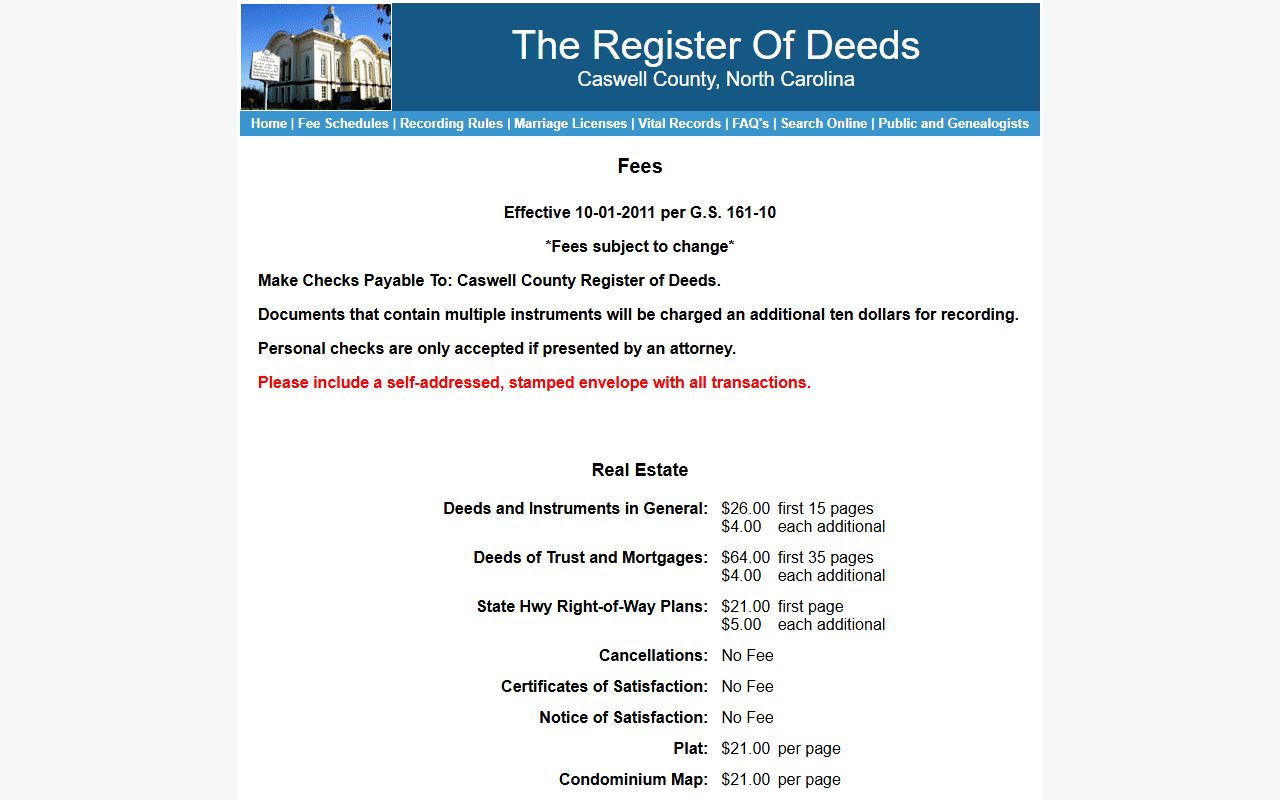
Those land-record and vital-copy fees can support an estate task, but they do not replace the clerk's estate filing costs.
What Caswell County Probate Records Show
Probate records usually tell the story of who sought authority, what property or interests were being administered, and what the clerk ordered. A typical file may show the decedent's name, application details, will if one was admitted, oath, bond if required, letters issued by the clerk, notices to creditors, inventories, accountings, receipts, orders, and final settlement entries. If a dispute develops, the file may also show hearings, petitions, objections, real-property special proceedings, and appeal entries.
| Record Field | What It May Show |
|---|---|
| Decedent or estate name | The person whose estate is being administered. |
| File or case number | The clerk case identifier used for search and copy requests. |
| Personal representative | Executor, administrator, applicant, or other person seeking authority. |
| Letters issued | Authority granted by the clerk to act for the estate. |
| Inventory and accounting | Property, claims, distributions, and settlement activity, subject to redaction where needed. |
| Orders and notices | Clerk decisions, creditor notices, hearing notices, or final settlement entries. |
The Register of Deeds online search application appears in the manifest as a crossover source for land and older index research.
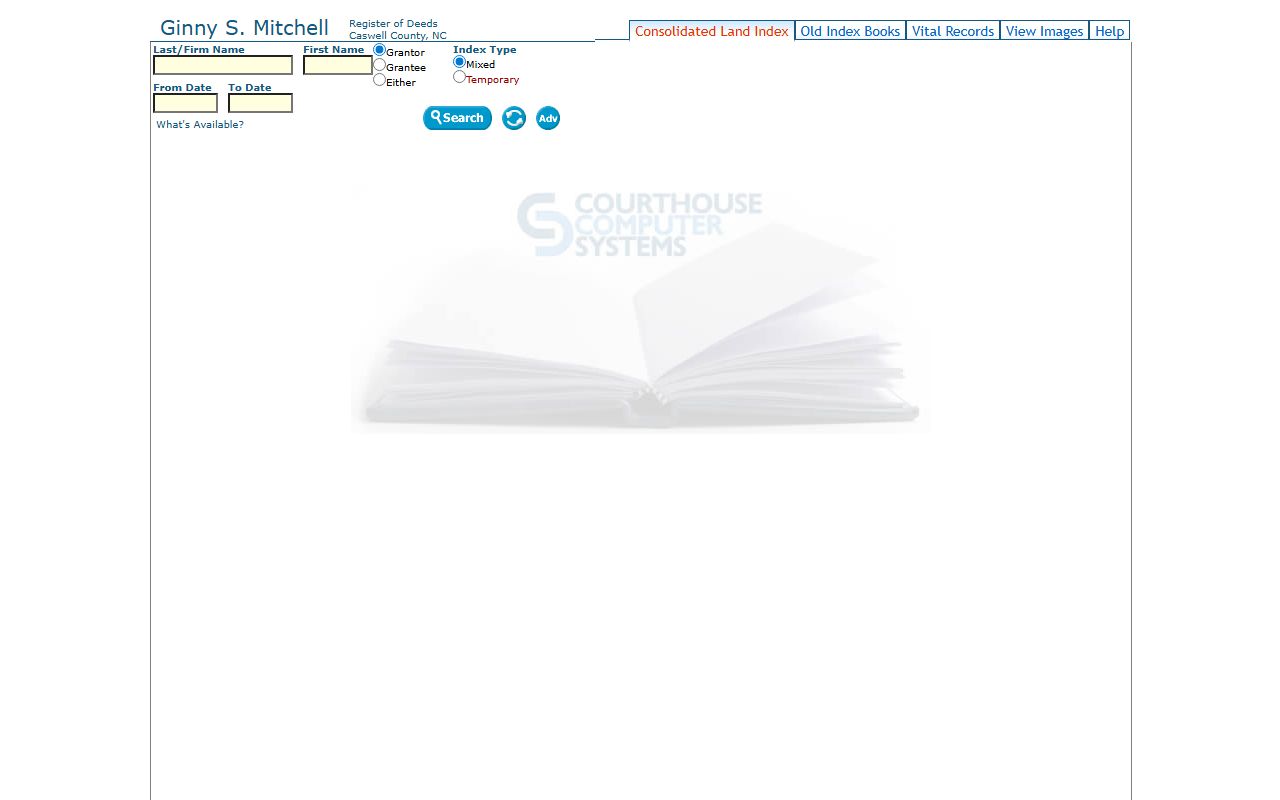
That separate search can help with deeds, maps, and recorded instruments tied to an estate, but the estate file itself remains with the clerk.
Probate Records and Land Research
Estate administration may require deed research. Caswell County's Register of Deeds maintains deeds, deeds of trust, maps, military discharge records, notary records, birth certificates, death certificates, and marriage licenses. The Register of Deeds real estate search fields include Last or Firm Name, Given Name, Grantor, Grantee, Either, date ranges, index type, book type, document type, tax range, description, document number, book, page, and result style. Those records are not probate records, but they often help explain estate property.
The Caswell recording standards source is useful when an estate-related deed or instrument needs to be recorded after a clerk order.
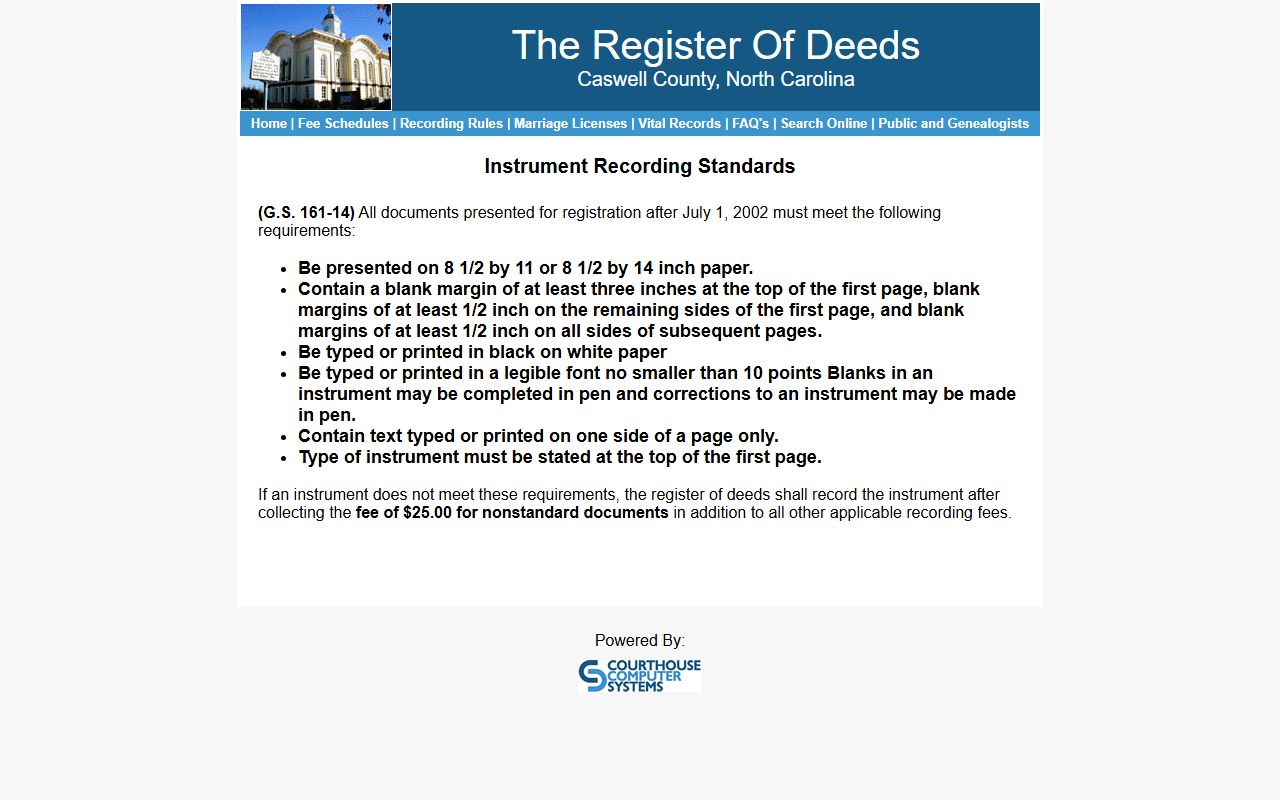
Recording standards apply to instruments submitted to the Register of Deeds, while the estate proceeding and clerk orders remain court records.
Restricted Caswell County Probate Records
Not every estate-related record is open in the same way. General estate case information may be available through Portal, public terminals, and clerk files, but confidential details may be redacted. Guardianship and incompetency matters can involve medical, financial, and personal information. Portal also groups Probate or Mental Health hearing searches together, but involuntary hospitalization and some mental health matters are confidential. Access may require party status, legal authority, or court permission.
Caswell County's Register of Deeds posts a personal-identifier redaction notice under N.C.G.S. 132-1.8(g). It warns filers not to place Social Security numbers, taxpayer IDs, driver license numbers, passport numbers, account numbers, PINs, or passwords in public recorded documents unless required or redacted. A person may request online redaction of such information by identifying the information, document, and location within the document. No fee is charged for that redaction request.
That redaction rule is most relevant to recorded instruments, but the same practical concern applies to estate files that contain personal financial data. A clerk file may be generally public while still withholding protected numbers, confidential financial details, or sealed guardianship material.